Watch video







 Sign in with Google
YouTube News
YouTube creator news June 2026: AI rights, $1B creators, and Shorts without dislikes

The most significant YouTube creator news June 2026 produced may have been filed in a federal courthouse. On June 8, Google asked a US district court to dismiss a copyright lawsuit over its Lyria 3 AI music model, arguing that independent artists who uploaded their music to YouTube had already licensed it for AI training, under the Terms of Service. The motion hasn’t been decided. But the argument itself is the story: Google is making it known, by taking this legal position, that it thinks uploading to YouTube is implicit consent for AI training.
Away from the lawsuit, June delivered two significant packaging changes. YouTube launched multi-language thumbnails, letting creators upload different thumbnail versions for different languages, and a June 25 Shorts redesign removed the dislike button and added 2x playback speed. On the same day, research was released that suggests YouTube content appears in roughly one in four AI chatbot responses, with long-form niche videos the most-cited category.
At the industry level, the month ended with the Forbes Top 50 Creators crossing $1 billion in collective earnings for the first time, CazéTV shattering YouTube’s live-streaming concurrent viewer record with 17.8 million viewers during a single World Cup match, and CAA and TPG launching a $250 million holding company to acquire creator businesses. For context on what’s been building across the year, May’s YouTube creator news update is worth a read alongside this one.
Read on for details and context on the major YouTube creator news from June 2026.

Get an unfair advantage on YouTube
Give your YouTube channel the upper hand and easily optimize for more views, more subs, and more of every metric that matters.
Table of contents
- Google says YouTube’s terms of service already licensed every upload for AI training
- YouTube Shorts removes the dislike button and added 2x playback speed
- One in four AI chatbot answers now includes a YouTube video
- YouTube’s new multi-language thumbnails are a “blue ocean” opportunity for creators
- CazéTV broke YouTube’s live-streaming record with 17.8 million concurrent World Cup viewers
- The Forbes Top 50 Creators earned over $1 billion for the first time
- CAA and TPG launched a $250 million company to acquire creator businesses
- YouTube creator news June 2026 — what all this means for creators
- FAQ: YouTube creator news June 2026
Google says YouTube’s terms of service already licensed every upload for AI training
On June 8, Google filed a motion to dismiss a copyright lawsuit brought by independent musicians who claim their recordings were used to train Lyria 3, Google’s AI music generation model, without permission. Google’s argument: by uploading their music to YouTube, artists accepted Terms of Service and in so doing, granted YouTube a “worldwide, non-exclusive, royalty-free, sublicensable and transferable license” to use their content. Google also argued that the plaintiffs hadn’t demonstrated concrete harm and that no infringing outputs had been identified. The motion was filed in the US District Court for the Northern District of Illinois.
It’ll be some time before this matter is decided but Google’s position in this lawsuit seems to be saying a lot about how it thinks about content ownership on YouTube.
Why it matters
This is a music industry lawsuit, but the Terms of Service argument is not limited to music. The same license language Google is invoking in court appears in the ToS that every creator accepts when they upload to YouTube. If the court accepts this framing, it would establish a precedent that uploading anything to the platform constitutes consent to use that content for AI training. That applies to video creators, educators, commentators, and anyone else who has ever published on YouTube.
The case will take time to resolve, and Google may win, lose, or see the argument narrowed. But creators who want to understand their rights on the platform should read their ToS with this framing in mind, and watch this case.
Via Music Business Worldwide: Google moves to dismiss indie artists’ Lyria 3 lawsuit, arguing they licensed their music to YouTube

YouTube Shorts removes the dislike button and added 2x playback speed
On June 25, YouTube announced a viewer-facing Shorts redesign. The dislike button is gone from the Shorts UI entirely. Likes remain as a heart icon. Two new viewer controls are coming: 2x playback speed, activated by pressing and holding anywhere on the screen, and a Clear Screen mode that hides all overlaid UI with a single tap. YouTube also added “Not interested” and “Don’t recommend this channel” as explicit viewer feedback options to replace the signal that dislikes were providing. The changes are rolling out gradually.
Why it matters
Creators have long used dislike counts as a rough signal of audience sentiment in Shorts — a quick read on whether a video is hitting or missing the mark. No more. What’s replacing it is algorithmic: the “Not interested” and “Don’t recommend” options feed directly into recommendation signals, but creators can’t see those in YouTube Studio. The feedback still exists, but creators can’t see it anymore.
The 2x speed option is the quieter implication. Shorts are already, well, short. Now, viewers can make them even shorter by playing at 2x speed. While data around how and when viewers fast-forward will almost certainly be captured somewhere (this is Google we’re talking about), it’s unknown if this data will be shared with creators.
Via TechCrunch: YouTube Shorts are getting even shorter with an update that lets you double the playback speed
One in four AI chatbot answers now includes a YouTube video
Research from marketing firm Jellyfish, published June 25 via Tubefilter and Adweek, found that YouTube content appears in roughly 25% of AI chatbot responses in the US. In high-intent categories like consumer electronics and financial services, that figure climbs toward 50%. More than one million unique YouTube videos are cited by AI chatbots daily in the consumer packaged goods (CPG) category alone. If this research is to be believed, YouTube has surpassed Reddit as the top referral destination from AI chatbots. The research also identified which videos get cited most: long-form content from niche channels, not just large accounts.
Why it matters
The implications of YouTube surpassing Reddit in large language model (LLM) responses may be huge. For independent creators, being cited by an AI chatbot is another potential distribution channel. When a viewer asks ChatGPT or Perplexity a question and gets a YouTube video in the response, that’s discovery that happened outside of YouTube’s own recommendation and search systems entirely: a video reaching a viewer who never went looking for it on YouTube.
Last month’s roundup covered Ask YouTube, which mines YouTube content to give clear, conversational answers that don’t give users much incentive to click through to watch a creator’s video. This month, the pendulum seems to swing in the other direction: LLMs are actively surfacing YouTube videos as sources, and the videos LLMs favors are long, specific, and authoritative. For creators who’ve been questioning whether long form still has a future in an AI-accelerated landscape, that’s a pretty clear argument for content that goes deep.
Via Tubefilter: YouTube creator content now appears in 25% of AI chatbot responses
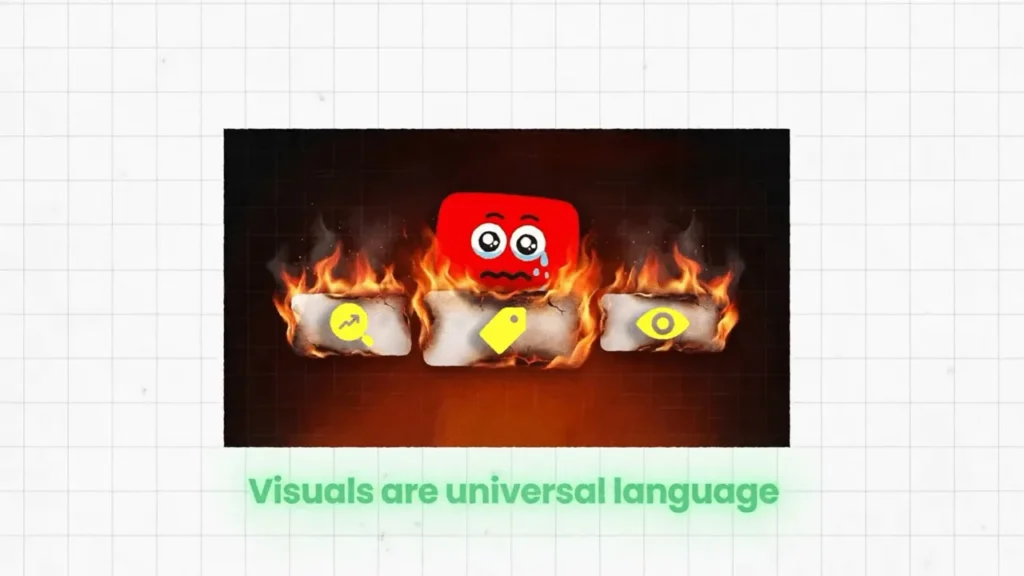
YouTube’s new multi-language thumbnails are a “blue ocean” opportunity for creators
YouTube added a feature that lets creators upload different thumbnail versions for different languages. YouTube then serves the right version based on viewer language and location. Titles and descriptions can be localized the same way. The setup is in YouTube Studio. Find it by going to content, selecting a video, choosing Languages, then hitting Add next to the thumbnail field. The feature pairs naturally with existing YouTube auto-dubbing tools a viewer who sees a localized thumbnail and clicks will hear the video in their own language, having a much better than one who gets the default packaging.
Why it matters
YouTube is a game of microseconds with viewers clicking faster on content they immediately understand. A thumbnail in a viewer’s native language removes friction before a single frame of the video plays. For creators already investing in their thumbnail design, localization applies that same investment to markets that are already showing up in their analytics.
The window here is that most channels haven’t done this yet. Start with YouTube Studio geography data: if a country is already sending you viewers, translate for that market first and measure the change in click-through. For markets where you’re not yet seeing meaningful traffic, a text-free thumbnail built on strong visual language — faces, emotion, contrast, obvious before-and-after — often performs better than a rushed translation anyway. TubeBuddy walked through the full setup, translation workflow, and prioritization strategy in a dedicated guide to multi-language thumbnails.
Via YouTube: Manage localized thumbnails in YouTube Studio
CazéTV broke YouTube’s live-streaming record with 17.8 million concurrent World Cup viewers
CazéTV, the Brazilian YouTube channel run by streamer Casimiro Miguel (who built his initial audience on Twitch), holds exclusive broadcast rights to all 104 World Cup matches in Brazil — the only outlet in the country with full tournament coverage. During a Brazil match in June 2026, CazéTV hit 17.8 million concurrent viewers, shattering the previous YouTube live-streaming record of roughly eight million set during India’s moon landing in 2023. The channel now has 35 million subscribers.
YouTube also launched a FIFA Creator Cup and partnered with creators across 11 countries as official World Cup correspondents.
Why it matters
This is the clearest demonstration yet that YouTube’s infrastructure can carry flagship live events at broadcast scale. The 17.8 million concurrent viewer figure isn’t a YouTube-adjacent stat — it beat traditional TV in one of the world’s biggest soccer markets, from a channel that started as an individual streamer’s page. For any creator building a live content strategy, the record matters as proof of what the platform can technically handle, and what an audience can aggregate around a creator rather than a network.
The creator correspondent program is the softer signal. YouTube partnered with creators alongside traditional media to cover the biggest sporting event on the planet. That’s a structural statement about how YouTube sees creator-journalists, and how advertisers and brands are increasingly expected to as well.
Via Fortune: Brazil’s biggest soccer broadcaster is now a guy who started on Twitch
Via Tubefilter: YouTube has revealed its creator lineup for the 2026 FIFA World Cup
The Forbes Top 50 Creators earned over $1 billion for the first time
Forbes published its 2026 Top Creators list on June 23. The group collectively earned $1.02 billion, the first time the list has crossed the billion mark in its five-year history. That’s up 20% from $853 million in 2025 and nearly double the $570 million total when the list debuted in 2022. MrBeast led for the fifth consecutive year at $300 million, followed by Dhar Mann ($65 million), Steven Bartlett ($52 million), Markiplier ($38 million), and Rhett & Link ($37 million). The growth was driven by creator-led films, streaming deals with Netflix and Amazon, and brand ventures. Ad revenue is a smaller part of the picture at this level.
Why it matters
The $1B milestone validates a shift that’s been building for years: the top creator businesses are diversified companies, not content operations that happen to run ads. MrBeast’s $300 million doesn’t come from YouTube ad share; it comes from Feastables, production partnerships, and merchandise. The revenue model has expanded.
For working creators, this list is useful context in brand negotiations and sponsorship conversations. The creator category is producing billion-dollar economies. That changes what a creator’s audience is worth in any room where media budgets get discussed.
Via Tubefilter: Forbes’ 2026 Top Creators list: first time collective earnings exceeded $1 billion
CAA and TPG launched a $250 million company to acquire creator businesses
On June 10, talent agency CAA and private equity firm TPG announced Compound Creative Holdings, a $250 million holding company designed to acquire, operate, and scale creator-led businesses. Tucker Brown, formerly of CAA Evolution, leads as managing partner. Brown’s prior work includes Dude Perfect’s major growth round. Compound Creative will operate independently from CAA’s existing creator division and is explicitly positioned as long-term, operational capital for creator enterprises, not a short-cycle fund.
Why it matters
A major talent agency and a large private equity firm don’t build a $250 million acquisition vehicle on a whim. The framing — “patient capital and operational infrastructure” — signals that the investment thesis is durable creator businesses with lasting enterprise value. Compound Creative isn’t looking for viral moments; it’s looking for creator companies with strong audience relationships, revenue diversification, and operating leverage.
Most creators won’t receive a call from Tucker Brown. But the fund’s existence is a market signal: if you’ve built a creator business that extends beyond ad-share income, the universe of buyers and partners for that business is much larger than it was two years ago.
Via Variety: CAA, TPG form $250 million Compound Creative company to buy creator businesses
Get an unfair advantage on YouTube
Give your YouTube channel the upper hand and easily optimize for more views, more subs, and more of every metric that matters.
YouTube creator news June 2026 — what all this means for creators
The Lyria 3 lawsuit is the month’s defining story, and the practical response is simple: understand what you agreed to in YouTube’s Terms of Service, stay tuned to TubeBuddy YouTube Creator News as we’ll track this case as it develops, and factor it into any strategy around audio-heavy content. Nothing has been decided yet. But the argument is on record, and that’s reason enough to pay attention.
The rest of June points in one direction: the surface area of where your content can reach people is expanding faster than most creators are accounting for. One in four AI chatbot answers already includes a YouTube video. Multi-language thumbnails are a first-mover click opportunity in markets that creators are getting traffic from but not converting. The Forbes $1B total and the Compound Creative fund both signal a creator economy that institutional capital now treats as a serious long-term asset class. Check your geography data in YouTube Studio, set up a translated thumbnail for your top international market, and read your ToS.
FAQ: YouTube creator news June 2026
Indie musicians sued Google claiming their recordings were used without permission to train Lyria 3, Google’s AI music generation model. In its June 8 motion to dismiss, Google argued that uploading to YouTube constitutes acceptance of Terms of Service broad enough to cover AI training. The case has not been decided, but if the court accepts this argument, it would establish that uploading anything to YouTube is implicit consent for AI training purposes.
YouTube announced a viewer-facing Shorts redesign: the dislike button is removed from the UI, likes remain as a heart icon, and 2x playback speed is available via a press-and-hold gesture. A Clear Screen mode hides all overlaid UI. YouTube added “Not interested” and “Don’t recommend this channel” as replacement feedback signals. The changes are rolling out gradually.
YouTube now lets you upload different thumbnail versions for different languages; YouTube serves the right version based on viewer language and location. Set it up in YouTube Studio: Content, select a video, Languages, Add next to the thumbnail field. TubeBuddy’s multi-language thumbnail guide covers the full setup, translation workflow, and which markets to prioritize first.
Research from Jellyfish found that YouTube content appears in roughly one in four AI chatbot responses, with long-form videos from niche creators disproportionately cited. When an AI chatbot cites a YouTube video in response to a user question, that’s discovery outside of YouTube’s own recommendation and search systems — a distribution channel that most creators aren’t yet optimizing for.
Compound Creative Holdings is a $250 million holding company formed by CAA and private equity firm TPG to acquire and operate creator businesses. Tucker Brown (formerly CAA Evolution) leads as managing partner. It signals that institutional capital now treats creator businesses as durable assets with enterprise value, which broadens the partnership and exit options available to established creators.
CazéTV, the Brazilian YouTube channel run by Casimiro Miguel (who started on Twitch), holds exclusive rights to all 104 World Cup matches in Brazil. During a Brazil match in June 2026, the channel hit 17.8 million concurrent viewers, surpassing the previous YouTube record of roughly eight million set during India’s moon landing in 2023. The channel has 35 million subscribers.